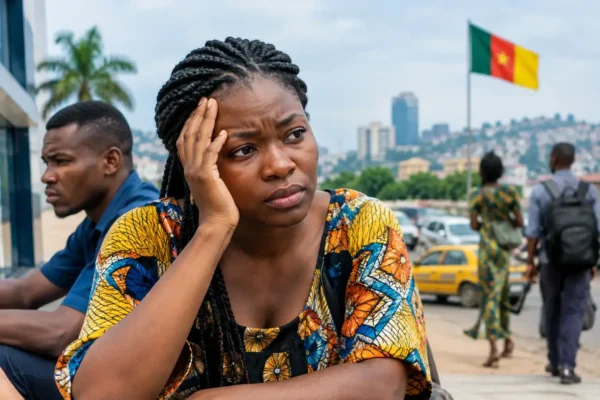
First plenary session of the Africa 21 Conference yesterday demonstrated how the continent??s resources can be a factor of development. A feeling of bitterness swept through the hall at the Conference Centre yesterday following the disturbing image of the African continent painted by the seven orators who made presentations at the first plenary session of the Yaounde International Conference, Africa 21. All the seven presentations carried with them an air of anguish as to why a continent as rich in natural and human resources as Africa should remain so poor. The presentations were oriented towards the main theme of the
conference; ??how can Africa make the most of its assets? Moderated by Louis Sylvain Ngoma, Secretary General of the Economic Commission of Central African States (ECCAS), the seven orators, attempted an explanation on the continent??s hurdles, demonstrating that Africa is capable of drawing the best of its potentials depending on the policies put in place. The presenters included: Alain Joyandet, Secretary of State in charge of cooperation and francophonie at the French Republic; Michel Rocard, former French Prime Minister, Valentine Rugwabiza, Deputy Director General of the World Trade Organisation, Arnold Ekpe, President Director General of Ecobank, Antoine Tsimi, Commission President of the Central African Economic and Monetary Community, Stefan Liebing, Director of the International Department of Gas, Energy Business, Baden-Württemberg, and Jacques Marraud des Grottes, African Director of Total Group. The series of exposés kicked off with Alain Joyandet calling on African countries to improve on their investment environment and good governance in order to attract direct foreign aid. There is no problem financing enterprises in the continent provided conditions are made favourable. The Deputy Director General of the World Trade Organisation deplored the tendency to depend so much on foreign assistance, a phenomenon that has been observed in most African countries. ??Sustainable foreign aid should not become the permanent source of development??, she said. Africa, she said, occupies third place in world trade for reason which range from difficult access to the market, weak supply capacity, poor infrastructure and high cost of trade caused by long procedures, complicated regulatory environment and too much bureaucracy. ??The continent still has residues of colonial system wherein export of raw material are basically channelled to the colonial masters. Arnold Ekpe, President Director General of Ecobank on his part, underscored the importance of regional integration as an important way out of underdevelopment. ??African countries do not compete with each other but with the rest of the World. He called on countries to open up regional and sub regional markets to avoid exporting almost everything they produce. To demonstrate how Africa relies so much on external market for its goods, he said, all railways are moving toward the cost to facilitate transportation of goods to ports of export. The Director of the International Department of Gas, Energy Business, Baden-Württemberg, pointed to Africa??s energy potentials, possessing 10 per cent of crude oil and 8 per cent of gas reserves. The continent produces eight million barrels a day making it third exporter of world??s crude oil. It is expected to step up production to nine million barrels some years after. Stefan Liebing wondered why a country like Ivory Coast should produce 40 per cent of the World??s Cocoa and yet benefit only 0.4 per cent from the crop. In the same vein, Michel Rocard said too much importation of food leads to unfavourable balance of Trade.
Ne manquez aucune actualite !
 Suivez-nous sur Google Actualites
Gratuit - Mises a jour en temps reel - Sur mobile et desktop